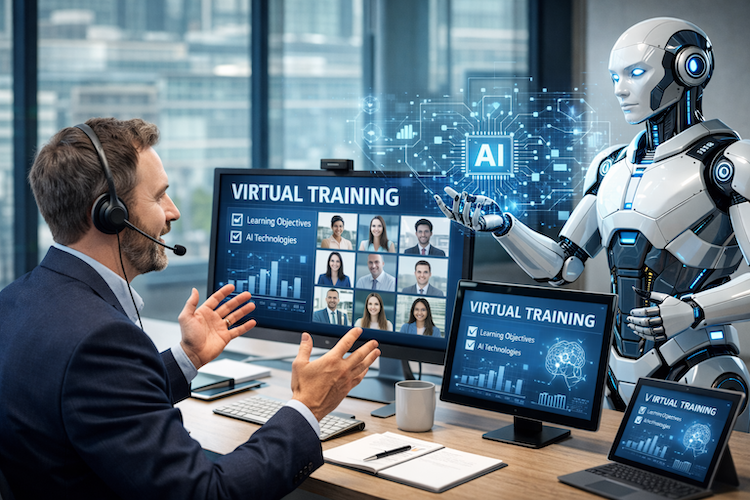
 Artificial intelligence is beginning to find its way into the global virtual classroom, and its value is less about novelty and more about practicality. When participants span time zones, languages, and cultures, facilitators need tools that reduce friction and allow them to focus on learning rather than logistics. Used thoughtfully, AI can support—not replace—the human judgment and presence that effective facilitation requires.
Here are several ways AI can add real value in global virtual learning:
- Improving clarity and accessibility: Live captions, translation, and post-session summaries help non-native speakers follow content in real time and revisit key points afterward. Turning captions on by default—and actually telling participants they’re available—can make a bigger difference than most facilitators expect.
- Supporting facilitator delivery: AI rehearsal and coaching tools can highlight pacing, filler words, and vocal variety—especially important when voice carries much of the message. They’re also a polite way to discover habits you didn’t realize you had, without a colleague having to point them out.
- Enhancing preparation: AI can help draft polls, discussion prompts, and breakout instructions that are clear, concise, and appropriate for diverse audiences. A quick human edit is still essential, but starting with a solid draft saves time and mental energy.
- Capturing insights without distraction: Automated summaries and chat analysis allow facilitators to stay present rather than scanning multiple panels during delivery. This means fewer moments of talking while silently wondering what you just missed in the chat.
- Scaling follow-up: Personalized recap emails or targeted resource recommendations can be generated quickly, reinforcing learning after the event. Participants notice—and appreciate—when follow-up feels thoughtful rather than generic.
As with any technology, the question is not can we use AI, but should we—and how. In the global virtual classroom, AI works best when it quietly removes barriers and frees facilitators to do what matters most: design intentional experiences and build meaningful connections across distance.