• Online Facilitation

    Polling: More Than Just Q and A

    On the surface, polling is way for a web conferencing facilitator to ask questions of the audience and gather responses. Often you may choose to open a web conference with opening or introductory polls. Responses to polls about tenure at an organization or native language provide the facilitator with essential information about the background of the audience to help guide the session.

    Polling can also be used creatively to support learning objectives. For example if you want to explore a web site with your audience, turn this activity into a scavenger hunt by posting a poll or two with “quiz” question. Then ask the audience to search the web site for answers to the poll questions. If you plan to share statistics or data, an interesting way to engage the audience is to pose questions about the data prior to revealing it. After the audience has a chance to respond to a poll on data, display the poll results juxtaposed against the actual data. Integrating polls into the content of your session using these techniques is a great way to maintain the interest of the audience and support your learning objectives at the same time.

    If polling is a topic that you would like to explore in depth, join me for a free web conference on Best Practices for Polling on Tuesday June 23, 2009 from 1-2 PM Eastern Time.

  • Online Facilitation

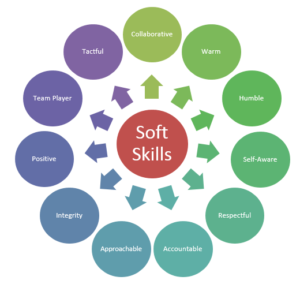
    Teaching Soft Skills: Not “Can We?” But “How Do We?”

    After speaking at the ASTD conference in DC this week, I was discussing with a few conference attendees whether or not you can successfully teach soft skills on a web conference. We exchanged a few good ideas including a suggestion from a participant to incorporate video.

    The discussion made me realize that it’s not a question of “can” but “how” we teach soft skills. With more than 137 workers worldwide involved in some sort of teleworking, a huge number of managers and others have to be able to give performance feedback or inspire others to follow his/her leadership virtually. Teaching these soft skills in a physical classroom is important, however when we teach these skills in a virtual classroom we simulate the real situation that many people face every day. The tools that virtual teams generally have at their disposal are the telephone and email, so they need to be taught how to deliver the appropriate messages verbally over the phone or in written communication.

    Pairing up participants to role play, scripting role plays, and asking participants to type a sample sentence for an email in the chat are just a few of the ways that we can simulate the situations for participants and make the virtual classroom reflect the reality of millions of workers.

  • Online Facilitation

    Facilitation Dream Team

    The content and complexity of your web conference will determine the facilitation team needed. In general, you need a facilitator and a producer to carry out key tasks such as:
    Facilitator Role

      • Main speaker, subject matter expert.
    • Advances slides. Engages audience verbally.
    • Not active in chat. Comments verbally on what others type.
    • Comments on poll results.
    • Leads and debriefs exercises.

    Producer Role

      • Web conferencing expert. May or may not be familiar with subject.
    • Explains technical features. May kick off and conclude the session.
    • Active in chat. Engages audience by posting and responding to questions/comments. Prompts facilitator to address chat questions. Types key messages to reinforce learning as facilitator speaks.
    • Opens/closes polls.
    • Explains how exercises will run.

    What does your faciliation dream team look like?

  • Online Facilitation

    Using Your Voice to Convey Body Language

    If you’ve ever attended presentation skills training, you may be familiar with the research findings that show that audiences receive the most meaning from your presentation from visual cues such as body language (55%), followed by your voice (38%) and finally from the verbal message (7%).

    Let’s assume you are not using a web cam in your web conference। How do you communicate your message and content with impact when your audience cannot see you? The trainer or presenter is left with his/her voice and content to keep participants engaged and interested. I’ll focus on voice in this posting.

    The speaker(s) during a web conference should focus on a variety of volume, pitch and rhythm in their voice. Presentations skills trainers often suggest that you think about how you use your voice when you read a story to your children or other kids. Clarity and focus are also of utmost importance. Finally, to keep the speaker’s voice animated, he or she should stand up during the web conference, smile and gesture while speaking. Even though the participants can’t see this body language, they will hear it in the speaker’s voice.

  • Online Facilitation

    Raising Your Language Awareness Level

    When you deliver a web conference, who are your participants and where are they from? With the reach of web, it’s possible that your audience may be more global than you think. You may spend a few minutes at the beginning of a session asking questions to determine who’s online and where are they from. You may also consider a poll question such as “Is English (Spanish, Arabic, etc.) your first language?” Responses to these types of polls give the facilitator essential information about the background of the audience to help make spoken language adjustments. For example, slang should always be kept to a minimum when the audience shares the same first language, and eliminated altogether if you have a diverse audience.

    During a conference call with a team in the UK a few weeks ago, I also realized that even business words in American English and British English may cause confusion. The team referred to “bespoke e-learning solutions” which made no sense to my American ears. Now I know that bespoke means customized, but I got hung up on this word in their email communications and during the call until they sorted it out for me.

    The spoken word in a web conference is so essential. Practicing what you plan to say with others from different cultures is a great way to raise your language awareness level so that what you say will be understood by everyone, regardless of where they are from.

  • Online Facilitation

    Group vs. Individual Participation

    One of my favorite courses I helped redesign for delivery in a web-conference is a workflow productivity course. During this highly interactive five-hour session, participants learn a new way of organizing to-do lists, emails and paper files. Although all participants are supposed to participate from their desk, in the most recent delivery a small group participated with laptops from a conference room. This was an unplanned twist in the delivery model, but an exception was allowed because we didn’t have time to move the group back to their desks.

    A very interesting group dynamic formed and I learned a great lesson – a mixed audience of individuals participating from their desks plus a group participating from a room may spell trouble. The solo participants were able to connect better with the instructor and other solo participants than the group, and consequently were able to work through the material better. At first I thought the small group would benefit from being together to help each other and exchange ideas, the small group began forming a clique, alienating the rest of the participants. Next time everyone will participate from their desks and we’ll try to leave those high school clique-forming tendencies to the high schoolers!

  • Online Facilitation

    Masie’s Missed Opportunity

    This week the Institute for Corporate Productivity teamed up with Elliot Masie of the MASIE Center Learning Lab and Think Tank to deliver a webinar on Informal & Social Learning. While the content of the webinar was interesting (a summary of findings of research conducted by i4cp with commentary/interpretation by Masie), the delivery was a missed opportunity by Masie to model best practices for utilizing web conferencing software. A few observations:

    1. The first three minutes: My first post on this blog was based on an article by Masie about the importance of the first three minutes of learning, which set the tone for the rest of an event. In this case the first three minutes consisted of an overview of findings as the audience viewed a title slide (not even a slide with key findings). A much more compelling opening would have been to turn some of the more interesting findings into questions for the audience such as, “What was the #1 practice correlated with the occurrence of informal learning?” (answer: sharing best practices).

    2. Duration of each slide: About halfway into the webinar, one slide remained on the screen for 9 minutes as the speakers talked, and the final content slide stayed up for a whopping 12 minutes! Keeping your audience engaged and attentive is an art not a science, but in this case the delivery team could have easily included a few more interesting slides to support their commentary.

    3. Q & A: The last ten minutes of the session were dedicated to Q & A. A good delivery team can weave the questions and answers throughout the web conference. If questions are collected throughout the session, the producer needs to be on the lookout for questions that map to a particular piece of content and get the speaker to incorporate questions from the audience during the entire session.

    Every time we use learning technology, even for a presentation that is not meant to be a true learning event, we have the opportunity to practice what we preach about adult learning. Masie’s content was intriguing, as always, but the delivery needed more polishing.

  • Virtual Training Design

    Putting on Your Marketing Hat

    Last week I attended a webinar hosted by Ken Molay of Webinar Success on the “Secrets of Lead-Generation Webinars.” While the webinar had a marketing slant, several of his ideas were applicable to a variety of web conferencing events, including learning events. Let’s face it, we all need to put on a marketing hat. A couple of notable tips from Molay are:

    “Get the audience to have a stake in the webinar – ask them to send questions before the event.”

    I like to send a pre-course survey before a web conference to get a sense of the learners’ experience level, needs and of course to see if they have specific questions they would like to address during the course.

    “Reminders: send the day before and again 1-3 hours before the event. In the reminder email, remind people of the value proposition so they remember why they signed up for your event. ”

    The timing of email reminders is critical, and I agree with Molay’s suggestion. Also make sure the reminder is coming from an email address that the learner expects. Ideally, all communications about your event should come from the same email address.

  • Online Facilitation

    Web Conferencing is Green

    One of the ancillary benefits of web conferencing that is sometimes overlooked is that by meeting virtually instead of face-to-face, carbon emissions are reduced. I like to include a slide at the beginning of each web conference that describes “what we saved,” to emphasize how web conferencing can contribute to carbon footprint reductions.

    1. First, Calculate carbon emissions from transportation. Enter participants’ flight info, or estimate where all participants would have come from, and come up with one average flight. Then multiply the emissions for that flight by # of participants. You can use emissions calculators from CarbonFund.org or Terrapass.com  

    For example, if you have a web conference with 30 participants and half of them would have flown from New York to Dallas-Fort Worth Texas (2,700 miles each or 40,500 total round trip) the carbon emissions would have been 7.57 tons for the flights alone.

    2. Next, convert the tons of carbon saved into something more tangible. The EPA has a great Greenhouse Gas Equivalencies Calculator. Use Option 2 and input CO2 totals from #1 above, then click “Calculate Equivalencies.” You’ll get a variety of results to choose from – select the ones that will resonate with your audience.

    Following the above example, 7.57 tons of emissions is the equivalent of recycling 2.4 tons of waste or the emissions from 16 barrels of oil.

    Pretty nifty!

  • Online Facilitation

    Tips from ASTD TechKnowledge Participants

    I am at the ASTD TechKnowledge Conference in Las Vegas Nevada and what an amazing week it has been. Today I made two presentations on “Facilitating Virtual Events,” one to a virtual audience and one in a traditional meeting room. In the spirit of knowledge sharing, I collected best practices and tips from both audiences and have posted them here. Any other good tips out there?

    · Applaud volunteers profusely
    · Rehearse in front of my dog
    · Don’t read your slides verbatim
    · Don’t put ALL content on slides. Slides should reinforce what you are saying
    · Use your National Public Radio (NPR) voice
    · Don’t limit interactivity to verbal questions. Ask for hand raises. Include electronic click questions, free text response questions, etc.
    · Create competitions to add some fun
    · If you plan to record, make sure people agree to be taped. Remember that every form of recording is discoverable in a court of law.
    · Participants should close all other non-applicable applications to enhance performance and reduce if not eliminate band-width issues.
    · Help presenters with developing their own interactive solutions by providing coaching feedback on their rehearsals/teach-backs
    · Give a “door prize” ( a gift certificate or book) for participants who complete pre-work (verified by us)