- It’s January so it must be resolution time. Here are ten ideas to think about as you get ready to facilitate webinars and other online events this year.1. Focus on your voice: The facilitator’s voice carries extra weight in a virtual environment, so focus on inflections, pace and rhythm. Speak clearly and purposefully. No slang or muttering allowed.2. Engage your audience early: Set the tone for an interactive session by engaging your audience early. Weave early interaction into the first few minutes of your session by asking participants to type their location into chat, respond to a poll about their background, and “raise” their hand if they can hear the audio clearly.3. Annotate while you speak: Most web conferencing tools include a pointer as well as annotation tools like a highlighter and other writing tools. Use these annotation tools generously but wisely as you speak to emphasize key information. Bob Mosher from LearningGuide Solutions is a master of this technique. You can feel Bob gesture as he uses the annotation tools to circle or highlight parts of the screen while speaking. I highly recommend observing Bob deliver an online session if you ever have the chance.4. Use interesting slides: Add images and color to your slides to make them visually appealing. As a rule of thumb I like to cover one concept per slide. This means that you may increase the number of slides as you spread out your content over more slides, but not increase the amount of content.5. Rehearse your session: Practice your session with a mock audience to fine tune the timing and flow of your material. Try recording your session and listening to yourself if you cannot rehearse with others.6. Know your audience: Learn as much as you can about your audience before you begin your webinar. Information such as their experience level with the topic, native language and experience with webinars will help you shape how you deliver your information. If you can’t find out this information ahead of time, run polls at the beginning of the session or post questions in chat.7. Start and end on time: Most of us are working on overdrive these days so respect your participants’ time. Plan to start and end your session on time and think about the factors that will allow this to happen. For example, send clear instructions and reminder emails to participants, join the session early to get everything prepared and rehearse so that you can ensure the material + interactions can covered in the time allotted.8. Observe other facilitators: Whenever possible, observe other online facilitators and note what you like and don’t like about their facilitation technique. Note how they engage the audience, how they present information on the screen and what they do in general to maintain your interest. I’ve also gathered many great ideas from in-person presenters who use techniques that can be translated to the virtual meeting room.9. Try something new: By observing other facilitators you will undoubtedly come across new ideas and techniques. Take a chance and try something new in your next session. If it works, you’ve added a new idea to your toolkit. If it didn’t work as planned, gather feedback on what happened and how to improve next time.10. Celebrate your successes: Just like traditional classroom facilitation, mastering the art of online facilitation is a continuous process. Sometimes it may feel that participants don’t appreciate all of the planning and behind the scenes work that goes on to design and deliver a successful webinar. Celebrate your successes by reviewing the positive feedback participants may have posted in the chat area or in the session evaluation and pat yourself on the back for a job well done.

- Picture this: A project manager with a geographically dispersed team, who was somewhat new to conducting meetings via web conference, decided to facilitate a project kick-off meeting using a web conference. Her goal was to get the team on the same page and make a good first impression. As the meeting started, she lost her Internet connection and lost her virtual meeting room. In a panic, the project manager blurted out that “I guess we won’t have a meeting. Why do these things always happen to ME?” in an exasperated tone. Sound familiar?A skilled online facilitator knows that from time to time, there will be technology glitches, and she knows how to keep her cool and deal with these issues with confidence. Ideally, you should partner with someone when facilitating an online meeting so that one person can run the meeting and a second person can handle technical issues. I also always make sure I can access the meeting agenda and handouts outside of the meeting room (either printed copies or a copy on my computer) so that I can continue the meeting on a phone line if needed. Even better if you can email all meeting documents to participants as a back-up.In this case, the project manager was using a separate phone connection, and everyone was still connected to the audio bridge. She also had a second person helping with the technical issues. Instead of panicking she could have muted the phone, told her partner that she would start the meeting without the visual and request a signal or a note to her to let her know the status of the virtual meeting room. A comment such as “We are working to restore the meeting room and can actually start without it by introducing the agenda and first topic, etc.” would have appeased her audience.As it turned out, in this meeting the internet connection was restored within minutes. The project manager lost credibility with her team by sounding the alarm bells and losing control of the situation. If she had been better prepared and planned with her co-facilitator, she could have seamlessly shifted from plan “a” to plan “b.” The participants would have certainly noticed that things weren’t going exactly as planned, but they would have also observed a professional who was well prepared, confident and kept her cool in a difficult situation.
-
This week I had a unique opportunity to attend a web conference with Bob Mosher of Learning Guide Solutions where I also served as the session producer. He presented a session for Metro DC ATD members on “Informal Learning – Are We Missing a Huge Opportunity.” Bob encouraged us to think about how to establish a “holistic learning ecosystem” that supports dynamic learning. A key component of a learning ecosystem is training was performance support “in the moment of need.”Not only was the material of the presentation extremely relevant for training professionals, but he also demonstrated best practices when delivering training via web conference. During his 45-minute session he included four chat exercises and a poll exercise interspersed throughout the session so the audience was continuously engaged. His slides were rich with images, graphs and concepts and not overloaded with the usual bullet points of text. Furthermore, when speaking, he annotated the screen non-stop using white board tools. I felt as if I could see him gesturing as he annotated and it added tremendous energy to the presentation. It was a very valuable session where the audience had a two for one experience: excellent content and an exceptional demonstration of how to make material come alive in a virtual classroom.
-
Recently I was interviewed by Charles Gluck for a podcast by the Metro DC Chapter of ASTD. The podcast covers suggestions and ideas for improving web conferences, the roles of the facilitation team, and how to calculate carbon emissions savings when traditional training is delivered via web conference.You can listed to the podcast by going to Metro DC ASTD Podcast.
-
I remember the first time I taught a course via web conference many years ago. My co-worker and I were both new to the technology, and it was the blind leading the blind. We noticed the chat feature and promptly turned it off as we decided that we didn’t want people chatting while we were talking – that would be too distracting, we surmised.Now as an experienced web conferencing practitioner, I can’t imagine a web conference without an active chat panel. Do I expect participants to chat as the facilitator speaks? Yes. Is it distracting, or does it mean they aren’t paying attention? No. If you copy and paste the chat text at the conclusion of a web conference and review what participants typed, you will usually see that the majority of the text contains comments about the session, answers to questions posed during the session and clarifying questions from participants. According to the eLearning Guild’s 2008 research report on Synchronous Learning Systems, chat ranks at the top of the feature satisfaction list and feature ease of use, and it’s the fifth most commonly used feature.
In today’s world of texting and microblogging, participants are more comfortable than ever with the chat panel in a web conference. Encourage your audience to use the chat area early in your session by doing something simple such as typing in their location. Give feedback early by acknowledge those who are the first to use the chat area, to send a signal that you will be responding to chat comments. As you verbalize a question, post it in the chat area as well. You may receive verbal and chat responses, which means more participants had the opportunity to contribute. The facilitator doesn’t need to respond to every chat comment or example, just acknowledge that there are many good examples and highlight a few. Weaving chat comments and questions into the verbal discussion or presentation opens up a huge door for interactivity.
- My last post focused on using your mouse deliberately for any movement on the screen. What else needs to be executed in a deliberate and overt manner in the virtual classroom? Nanette Miner shares excellent tips on deliberate language in her article, The Non-Drowsy Virtual Classroom in T&D Magazine this month. Miner suggests, “… language in the virtual classroom needs to be much more direct.” and “To assist your participants, give written instructions for activities, preferably both on the screen and in a handout.”
Confusion among participants when they are asked to complete a task or activity is not uncommon, but can be easily eliminated with deliberate language. Graphics and images can also support your instruction. For example, when facilitating a course with scripted role play, we asked two participants to volunteer by raising their hands and simultaneously showed a slide with instructions on how to raise your hand plus an image of raised hands. Next we assigned roles and asked the two volunteers to read the script on the screen. The role play was written like the script for a play and speaker lines were highlighted in corresponding colors to keep it straight. By encircling a task with clear instructions and images, we eliminated confusion and didn’t miss a beat with this exercise.
-
I attended a web conference today where the presenter was sharing his screen with the audience and demonstrating various features of a web product that shall remain unnamed. He was a fine speaker, however, he had a frustrating habit that I’ve seen with many web conferencing presenters – I call it antsy mouse syndrome. The presenter was constantly moving his mouse all over the screen as he spoke which was very distracting. In a physical classroom this distracting behavior occurs as well, when the speaker with a laser pointer tries to “circle” what he’s pointing to on the screen. Most speakers naturally have a tendency to gesture to support their spoken word, which is a good thing, however gesturing with a mouse or pointer tool in a web conference will leave your audience dazed as confused as they won’t know where they should focus on the screen.To prevent this problem, all of your mouse or pointer movements should be slow and deliberate so your audience can follow your movements. As you point or click, tell the audience what you are doing, for example: “I’m clicking on the Reports tab to open up a drop down menu. Next I’ll select Manager Reports…etc.”
One way to check your mouse movements to is to log in as a participant and watch the participant view as you click through a web site or whatever it is that you will be demonstrating. Another technique is to record yourself as you rehearse. In either case, watch closely to ensure that your mouse or pointer movements are supporting your content and objectives and not taking away from your audience’s experience.
- On the surface, polling is way for a web conferencing facilitator to ask questions of the audience and gather responses. Often you may choose to open a web conference with opening or introductory polls. Responses to polls about tenure at an organization or native language provide the facilitator with essential information about the background of the audience to help guide the session.
Polling can also be used creatively to support learning objectives. For example if you want to explore a web site with your audience, turn this activity into a scavenger hunt by posting a poll or two with “quiz” question. Then ask the audience to search the web site for answers to the poll questions. If you plan to share statistics or data, an interesting way to engage the audience is to pose questions about the data prior to revealing it. After the audience has a chance to respond to a poll on data, display the poll results juxtaposed against the actual data. Integrating polls into the content of your session using these techniques is a great way to maintain the interest of the audience and support your learning objectives at the same time.
If polling is a topic that you would like to explore in depth, join me for a free web conference on Best Practices for Polling on Tuesday June 23, 2009 from 1-2 PM Eastern Time.
-
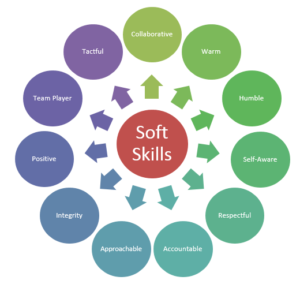
After speaking at the ASTD conference in DC this week, I was discussing with a few conference attendees whether or not you can successfully teach soft skills on a web conference. We exchanged a few good ideas including a suggestion from a participant to incorporate video.The discussion made me realize that it’s not a question of “can” but “how” we teach soft skills. With more than 137 workers worldwide involved in some sort of teleworking, a huge number of managers and others have to be able to give performance feedback or inspire others to follow his/her leadership virtually. Teaching these soft skills in a physical classroom is important, however when we teach these skills in a virtual classroom we simulate the real situation that many people face every day. The tools that virtual teams generally have at their disposal are the telephone and email, so they need to be taught how to deliver the appropriate messages verbally over the phone or in written communication.
Pairing up participants to role play, scripting role plays, and asking participants to type a sample sentence for an email in the chat are just a few of the ways that we can simulate the situations for participants and make the virtual classroom reflect the reality of millions of workers.
- The content and complexity of your web conference will determine the facilitation team needed. In general, you need a facilitator and a producer to carry out key tasks such as:
Facilitator Role-
- Main speaker, subject matter expert.
- Advances slides. Engages audience verbally.
- Not active in chat. Comments verbally on what others type.
- Comments on poll results.
- Leads and debriefs exercises.
Producer Role
-
- Web conferencing expert. May or may not be familiar with subject.
- Explains technical features. May kick off and conclude the session.
- Active in chat. Engages audience by posting and responding to questions/comments. Prompts facilitator to address chat questions. Types key messages to reinforce learning as facilitator speaks.
- Opens/closes polls.
- Explains how exercises will run.
What does your faciliation dream team look like?
-